
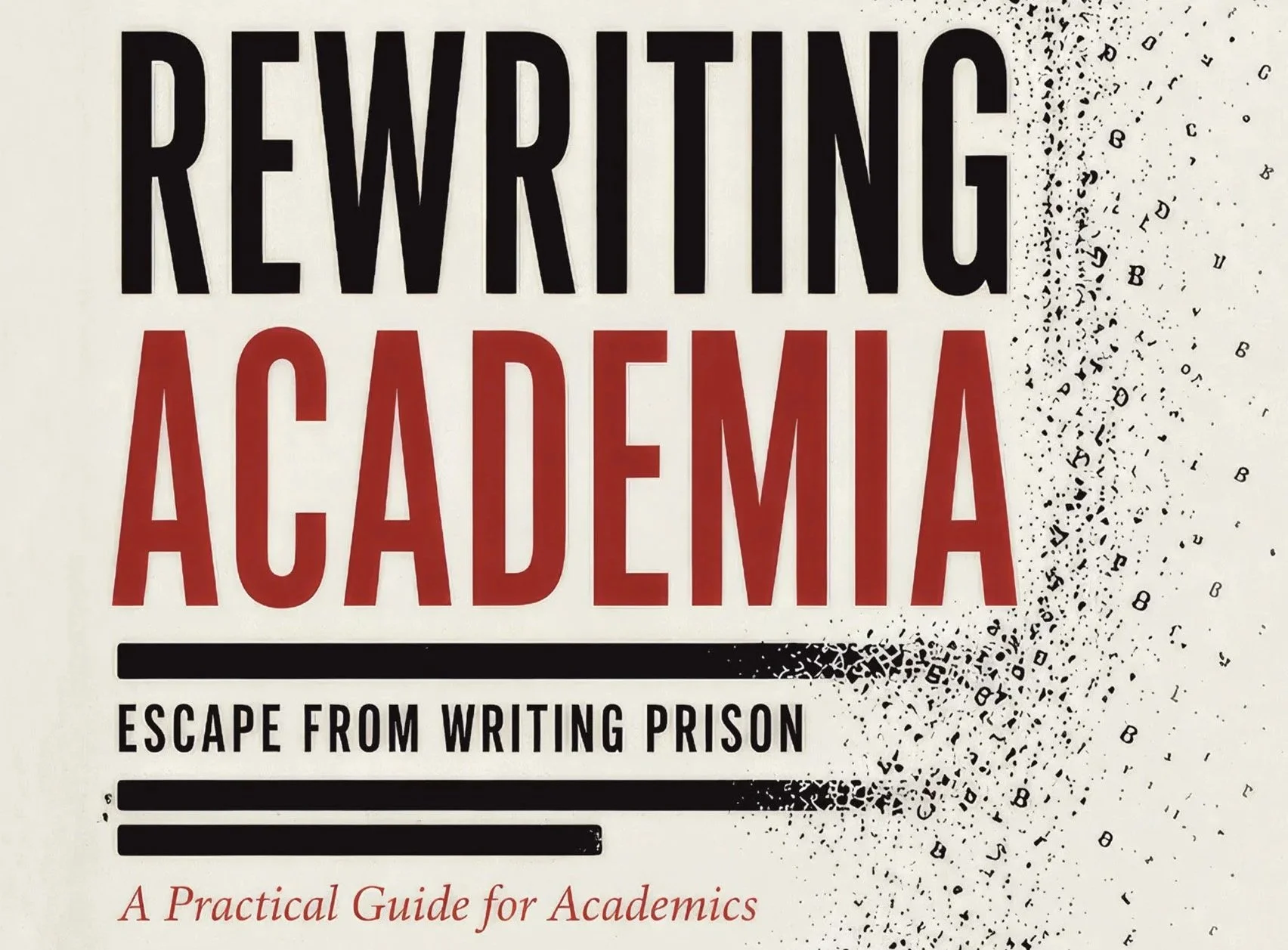
Let’s look at how this book was written
So I have finally had time to review my book writing stats and thought it might be useful to share insight into the process of writing this book.
Did I take my own advice? Why yes I did! I did indeed. And like all advice I give, I always encourage clients to mediate it through there own lived realities, and I did the same.
So what did the timelime look like?
I started this book in earnest in October 2026 and submitted the manuscript to the publisher at the end of March 2026. And because I executed the number one piece of advice I give to ALL my clients - time tracking - I have the receipts. So we can do a deep dive together on what this timeline looked like. I know exactly how my book was written, when and how much time it took and how that time was split. So if I were to write my next book, well, my planning would be super accurate, as now I have a - albeit incomplete - dataset.
I wrote this book alongside my clients in Mastering the Monograph and I implemented the advice I give in that programme; just like those clients, I used the Writing Sprint Club to write this book too.
Background
First, the background information which is important - with all the caveats. The first is on length - this book is only 50k, not the 80k of a standard monograph. The second is about ideation - my ideation process was pretty much completed on this project way in advance of me writing it, so that time is missing, because this is a book I have been thinking about for a long time, and have developed a lot of thinking inside my coaching materials. Ideation is essentially not tracked. Similarly the third caveat is this is not an academic research book, but a light hearted self-help coaching book, and the research and note taking stages were already done. This research forms part of my coaching programmes so all the reading and note taking were already complete.
So this for me was largely a writing, editing, copy editing, polishing, thinking, exercise. With all this in mind, let’s do a deep dive on figures.
The stats
This book took about 203 hours 39 minutes to write. That time has not ended yet, because I still have to put time into doing something with it, and I will record that time too. But for the purposes of thinking through the writing, this is our headline figure.
When we look at how much of that time was dedicated to drafting and editing (ie producing the manuscript to initial submission to publisher) it took 177.81 hours, which accounted for about 25% of my workload between October-April. In the period where I was working most heavily on it (Oct-Dec) it had 41% of my workload. So alongside running my business, managing my team, doing coaching with clients and universities, marketing and all the never ending admin involved, I still gave this book a hefty amount of my working time.
What about when I worked on it?
94% of all the time spent on the book was between 9pm-6pm with just one session (editing) extending to 7.30pm, confirming my advice on work life balance and not going over my 40 hour week, even now as someone who is self employed. Around 42% of all my writing time was in the morning, notably any small amounts of ideation and more drafting than editing. Even though morning writing is my preferred time, clearly it was not always available and I had to adapt my practice to something that was doable. Coaching tip: have a good routine, but be prepared to write anytime, anywhere. That is writing freedom.
26 of my writing sessions happened inside the Writing Sprint Club - because as I will always tell you, writing is better, together. Social writing is proven to increase your output.
What did writing blocks look like?
I often worked in separate blocks of time (hello time blocking) and might have as many as 3 in a day (eg on Nov 11 i worked from 10.30-12.30, 2-4, 4.30-6 - that was a BIG day). But of all my entries, 49 were 2 hours or less in length, busting the myth that ‘big blocks of time’ are required.
Many entries contained shorter multiple working blocks (30 mins).
30% roughly of my writing time was spent drafting, and 70% was spent editing which if you’ve followed my 5 drafts to finish model, you will recognise as the kind of practice I would teach (this does not include checking the copy editing or final polish).
Overall, I had a flexible daytime practice. I worked on the book roughly every two days out of three in my concentrated period of engagement. I then took an extended holiday period in January (with a great off ramp in place 😀) and then returned directly to editing - the draft was completed and I had to edit around my other work which now took priority. So 50% of my time on the book it was THE priority and then it had to be juggled in the closing stages. The hard yards had already been done and the final phase of editing was much more intermittent. I was well inside the deadline I had given myself, which was that the bulk of it be completed by Christmas.
Writing the book was a joyous exercise for me. I truly enjoyed the act of creation, and I really had fun bringing something I have been thinking about to fruition.
You can see there was no perfect pattern. There was no strict recording of every single thing I did, broken down into minute tasks. Sometimes I forgot no doubt to press the record button.
The things I want you to take away from this are: there was though a consistent engagement with the project and a long period of prioritisation over other work before I could rebalance my attention, to when all the hard yards of thinking and creating were over. There was in fact more writing in my none preferred times, because I had other appointments and had to adjust. There was some planning, but it did not consume much time. There was a consistent goal for each session, but not necessarily detailed task lists. Periodically I can see a did a review of my engagement and task list.
Most importantly when time got tight, I did not abandon the project, I did not get stuck in perfectionist loops. I also didn’t feel like I could not take a holiday - I had 3 weeks away. I finished the book quickly whilst I still liked the idea, and I will die on that hill.
A book is a joy to write when you have not been on it long enough to question whether you really want to do this book. If you’re ready to escape writing prison and create a new relationship with your writing, this book is for you!
Get your copy
Choose your preferred bookseller: